
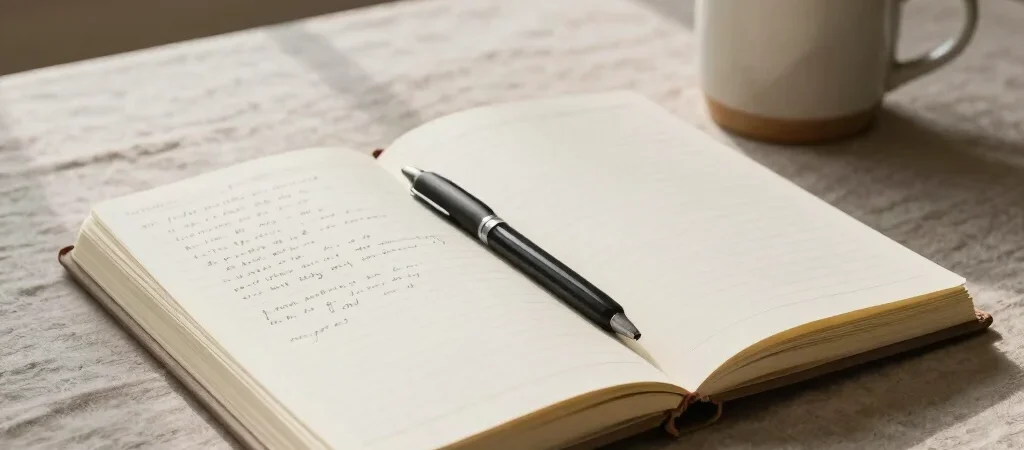
The blank page can feel like another assignment, especially when you imagine that journaling means writing beautifully every night. It can be simpler than that. A useful journal is less about producing a record and more about paying attention to what you might otherwise rush past.
Start With What Stayed
At the end of the day, write down one moment that stayed with you: a kind word, an awkward silence, or the relief of getting home after a long shift. Add what you noticed about your response. The detail does not need to be important to anyone else.
Ask a Kinder Question
If something went poorly, try asking, “What made that hard?” instead of “Why can’t I get this right?” The first question looks for context, such as fatigue, mixed expectations, or a conversation you postponed. That context may suggest a small adjustment without turning reflection into self-criticism.
Return Without Keeping Score
Some weeks you may write often; other weeks the notebook can stay closed. There is no need to fill every page or catch up on missed days. Leave it somewhere visible and return when you have something to notice, even if it is only a sentence.